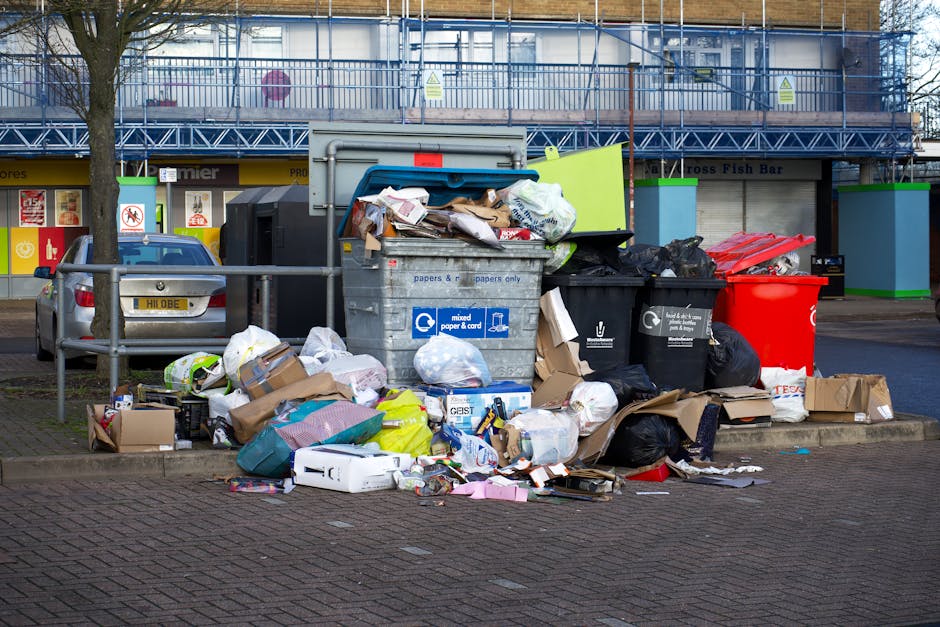
Rubbish Clearance for Dulwich Shops and Offices
If you run a shop, studio, cafe, practice, or office in Dulwich, rubbish has a way of building up quietly and then all at once. A few old boxes here, broken display items there, a stack of packaging in the back room, a printer that nobody wants to look at. Before long, the space feels tighter, messier, and less professional than it should. Rubbish Clearance for Dulwich Shops and Offices is about getting that clutter out quickly, safely, and with as little disruption as possible.
Done properly, commercial clearance is not just a tidy-up. It protects your staff flow, keeps customers happier, supports safer working conditions, and helps you stay on top of waste handling responsibilities. In this guide, you'll find a clear, practical breakdown of how the process works, what to watch out for, and how to choose the right method for your premises. A lot of businesses think they only need help once a year. Truth be told, many need it more often than they realise.
Why Rubbish Clearance for Dulwich Shops and Offices Matters
Commercial waste is different from household waste in a few important ways. It tends to be more frequent, more varied, and more sensitive to disruption. Shops generate packaging, damaged stock, old signage, fixtures, and end-of-line display material. Offices build up paper waste, IT equipment, furniture, storage clutter, and confidential documents. Add in a busy Dulwich high-street pace, and rubbish can start to affect how your business feels from the moment someone walks in.
For a shop, clutter often sits in the customer-facing areas longer than it should because staff are focused on serving people. For an office, waste often hides in meeting rooms, side rooms, under desks, and that one cupboard everyone avoids. It is never just about what you can see, either. Overflowing waste can create trip hazards, block access routes, attract pests, and make cleaning harder than it needs to be.
There is also the reputational side. Customers and clients notice a tidy, organised space. They may not say it out loud, but they feel it. A clean back-of-house area usually means smoother stock handling, fewer slips and spills, and a more professional day-to-day rhythm. And if you're trying to keep operations moving during a refit, relocation, or stock reset, rubbish clearance becomes part of the workflow, not an afterthought.
In Dulwich, where many businesses operate in compact premises or shared buildings, access matters too. Narrow entrances, restricted parking, timed loading, and neighbours who do not want bins left out for hours can all make waste removal feel oddly complicated. That is where the right approach matters most.
Expert summary: The best rubbish clearance service for shops and offices is the one that removes waste without slowing your business down. Fast is good. Careful is better. Both together is ideal.
How Rubbish Clearance for Dulwich Shops and Offices Works
At its simplest, commercial rubbish clearance is the organised removal of unwanted waste from your business premises. The details depend on the volume, type of waste, access on site, and how quickly you need the area cleared. Some jobs are straightforward and can be handled in one visit. Others need a bit more planning, especially when furniture, bulky items, or confidential materials are involved.
In many cases, the process starts with a short assessment. You explain what needs clearing, where it is stored, and whether there are any access issues. That might include basement storage, upstairs offices, rear courtyards, shared access ways, or lifts that are, let's say, not in their prime. Once the scope is understood, the service can be matched to the job.
For smaller collections, a rubbish removal service may be the simplest option. For regular commercial waste or larger clear-outs, commercial skip hire can be useful where there is space to place a skip and fill it over time. If access is tight, a wait and load skip hire approach can save a lot of hassle because the waste is loaded and taken away promptly rather than left outside.
Some jobs are time-sensitive. Think of a shop refit on a Monday morning or an office handover at the end of the week. In those cases, same-day or rapid response services can be valuable. If the waste includes paper records, client files, or other sensitive material, confidential shredding should be considered rather than mixing those items in with general waste.
There is no single "best" clearance method. The right solution depends on the job. That sounds obvious, maybe, but it is where many businesses save money and avoid delays.
Key Benefits and Practical Advantages
Good rubbish clearance gives you more than a cleaner floor. It improves the way your premises function from one end of the day to the other.
- Better presentation: Cleaner spaces feel more professional to customers, staff, and visitors.
- Safer working conditions: Removing loose waste reduces trip hazards and access blockages.
- More usable space: Storage rooms, stock areas, and office corners become useful again.
- Less disruption: A planned clearance is easier than dealing with waste in a rush.
- Improved recycling: Sorting suitable materials helps reduce landfill and supports better waste handling.
- Reduced stress: A clear workspace is easier to manage. You feel it straight away.
There is also a practical financial angle. When waste is left to pile up, it often takes longer and costs more to remove later. Bundling a clear-out with a refurbishment, stock change, or office move can be more efficient than leaving it until the end. We have all seen the "we'll deal with it later" pile. It rarely gets smaller on its own.
For businesses that handle mixed waste streams, the right clearance approach can also protect valuable assets. For example, a shop replacing refrigeration units may need fridge and appliance removal, while an office replacing worn seating could benefit from mattress and sofa disposal if staff rest areas or furnished spaces are being updated.
Who This Is For and When It Makes Sense
This type of service is useful for a wide range of businesses. It is not just for major refurbishments or huge clear-outs. In fact, some of the most common requests are for ordinary premises that have simply become overfilled over time.
Typical users include:
- Independent shops and boutiques
- Cafes, takeaways, and hospitality venues
- Offices, studios, and co-working spaces
- Clinics and professional practices
- Showrooms and retail units
- Landlords and property managers arranging commercial voids
- Contractors supporting fit-outs or strip-outs
It makes sense when you are:
- moving premises
- reconfiguring a workspace
- clearing post-refurbishment waste
- dealing with stock overspill or packaging waste
- removing old office furniture
- opening a new site and need a clean start
Sometimes the trigger is seasonal. January tidy-ups are common. So are pre-summer shop resets and end-of-year office clear-outs when everyone starts muttering about the spare room, the cupboard, and "that pile near the printer". Familiar story.
For larger back-of-house clean-ups, related services like office clearance and site clearance can be especially useful when the job goes beyond simple rubbish removal and includes furniture, fittings, or broader clearing works.
Step-by-Step Guidance
If you want a smooth clearance, the process is much easier when you break it down before anything is booked. Here is a sensible way to approach it.
- Identify the waste types. Separate general rubbish, recyclable materials, furniture, electrical items, and anything sensitive or hazardous.
- Measure the volume. A few sacks of waste is a different job from a room full of desks and shelving. Be honest about scale.
- Check access. Note staircases, narrow entrances, controlled parking, loading points, and any shared access restrictions.
- Decide the timing. Choose a time that causes the least disruption, such as early morning, after closing, or during a quiet trading window.
- Match the method. Use skip hire, wait-and-load, man-and-van clearance, or grab hire depending on space and urgency.
- Protect sensitive materials. Remove confidential documents for shredding and keep electrical items separate where possible.
- Confirm where waste goes. Ask how items are sorted and recycled so you understand the disposal route.
- Prepare the area. Move breakables, secure cash tills, and make sure staff know what is being removed.
If you are unsure which method fits best, it helps to compare the main options before you commit. A quick conversation can prevent a lot of needless rework later.
Expert Tips for Better Results
There are a few small habits that make a surprisingly big difference. None of them are flashy, but they save time and reduce stress.
- Sort before collection where you can. Mixed waste takes longer to handle. Even light separation helps.
- Keep a clear route. Move obstacles from corridors and doorways before the team arrives.
- Photograph the waste pile. It helps with planning and avoids "it was only a few bits" surprises.
- Label anything confidential. Staff should know what must not be mixed with general rubbish.
- Think about future waste. If you clear regularly, set a routine rather than waiting for a crisis.
- Ask about recycling. A reputable provider should be able to explain how different waste streams are handled.
A small but useful point: if your waste tends to arrive in bursts, plan a collection day before the clutter gets annoying. That annoying stage is usually when mistakes happen. And yes, there is always one drawer that contains three chargers, two pens, and a mystery key. Always.
When access is awkward, methods like grab lorry hire can be very practical because they suit larger volumes and sites where manual loading is easier than parking a skip for long periods. For tighter commercial sites, enclosed and lockable skip hire may be worth considering where security or nuisance prevention matters.
Common Mistakes to Avoid
Most waste clear-outs go well, but a few avoidable mistakes keep cropping up.
- Underestimating volume: A small pile often grows once cupboards, storage rooms, and rear spaces are opened up.
- Ignoring access issues: If a vehicle cannot get close enough, collection can take longer than expected.
- Mixing waste types: General rubbish, recyclables, electrical items, and confidential paperwork should not all be treated the same way.
- Leaving it too late: Waiting until you are under pressure can reduce your options.
- Not checking restricted items: Some materials need special handling and should not be placed with standard waste.
- Forgetting permits or permissions: If a skip will be placed on a public road, permissions may be needed.
One of the most frustrating problems is ordering the wrong size or wrong type of clearance and then having to rebook. It sounds minor until you are standing in a cluttered office at 4:30pm, trying to sort it out before the next day's opening. Not fun.
Tools, Resources and Recommendations
You do not need a toolkit full of specialist gear to organise waste properly, but a few simple resources make planning far easier.
- Waste inventory list: A short list of what is being removed, room by room.
- Basic measuring tape: Helpful for estimating bulky items and access width.
- Reusable labels or tape: Useful for marking items for shredding, recycling, or reuse.
- Phone camera: Good for recording what needs clearing before the team arrives.
- Internal contact list: Make sure staff know who approves the clearance and who handles access.
On the service side, it helps to look at the provider's wider support pages so you understand the process rather than just the collection itself. Skip hire can suit ongoing work. skip sizes and prices can help you estimate what you need. And if your team wants to book quickly, book online is often the easiest first step.
For businesses comparing options, the page on pricing and quotes is a sensible place to start, especially if you need to balance speed, access, and waste volume. If sustainability matters to your business values or customer messaging, recycling and sustainability is also worth reviewing.
Law, Compliance, Standards, or Best Practice
Commercial waste handling in the UK is something businesses should treat with care. You do not need to become a waste-law expert overnight, but you do need to make sensible choices and avoid dumping responsibility on guesswork.
As a business, you are generally expected to ensure your waste is managed by a suitable, lawful route and handled by someone who can deal with it appropriately. If you are disposing of confidential papers, that should be treated separately from ordinary rubbish. If you are dealing with electricals, refrigeration equipment, or anything potentially hazardous, those items need specific attention rather than being thrown into mixed waste.
Best practice also includes keeping a basic record of what was removed, when, and how. That is not just neat admin. It helps if you ever need to show responsible disposal and makes repeat collections easier to plan. It also reduces the chances of someone in the business saying, "I thought you were dealing with that." We have all heard that line.
Health and safety should not be an afterthought either. Rubbish piles can hide sharp objects, unstable furniture, broken glass, and awkward lifting risks. A good provider should work in line with sensible safety controls, and your team should keep walkways, exits, and customer areas clear during the job. If in doubt, treat the space like a live working environment, because it is.
For general reassurance, it helps to review business policies such as health and safety policy, insurance and safety, and terms and conditions before booking. They do not make the job glamorous, but they do make it clearer and safer.
Options, Methods, or Comparison Table
Different premises need different approaches. A small office above a shop is not the same as a ground-floor retail unit with rear yard access. This comparison is a useful starting point.
| Method | Best for | Strengths | Watch-outs |
|---|---|---|---|
| Rubbish removal | Small to medium one-off clearances | Simple, flexible, quick to arrange | May be less suited to very large volumes |
| Commercial skip hire | Ongoing projects or repeated waste generation | Useful for phased loading, good for busy sites | Needs space and may need permit support |
| Wait and load | Sites with little room for a skip | No long-term skip presence, fast turnaround | Requires the waste to be ready to load quickly |
| Grab lorry hire | Larger or bulkier loads | Efficient for heavy or awkward waste | Needs suitable access for the vehicle |
| Man and van | Smaller commercial clearances or mixed items | Very flexible and good for awkward items | Can be less efficient for substantial bulk |
If you are unsure, start with the question: do you need a container, a vehicle, or a full clearance team? That usually narrows it down quickly. And if the answer is "all three, probably", then the site may need a more tailored plan.
In some cases, related services like waste recycling services and what can go in a skip help clarify the practical limits before collection day.
Case Study or Real-World Example
Here is a realistic example. A small Dulwich retailer is preparing for a store refresh before a busy weekend. The back room has old display materials, packaging from stock deliveries, broken shelving, and a handful of worn-out fixtures that have been sitting there for months. The shop manager wants the space cleared without shutting the business for a full day.
Instead of waiting until everything becomes a last-minute panic, the team groups waste by type, moves fragile items out of the way, and books a collection for early morning before opening. Because the access is tight and there is no wish to leave a skip outside all day, a quicker collection method is chosen. The result is simple: the work starts on time, the shop feels sharper by lunchtime, and staff can actually use the stock room again.
Now compare that with the usual approach of "we'll sort it next week". Next week becomes next month, the pile gets bigger, and the job turns from tidy-up into minor chaos. The difference is not dramatic, but it is real. Most good clearances feel like that: not flashy, just quietly effective.
A similar pattern applies in offices. A team may be upgrading desks, removing broken chairs, and clearing archived paper files. If confidential materials are involved, the clear-out becomes much more straightforward when shredding is separated from the rest of the waste from the beginning. Small decision. Big relief.
Practical Checklist
Use this checklist before booking rubbish clearance for your shop or office.
- Have you listed all waste items, including bulky items and office furniture?
- Do you know whether any items need confidential shredding or special handling?
- Have you checked access for vehicles and removal staff?
- Do you know whether a skip permit or other permission might be needed?
- Have you separated recyclable waste where practical?
- Is the timing set to minimise customer or staff disruption?
- Have you cleared walkways, exits, and loading areas?
- Do you know who will be on site to sign off the job?
- Have you reviewed pricing, terms, and safety details?
- Have you planned for any waste that cannot go in a standard load?
If you can answer yes to most of those, you are in a strong position. If not, no drama. It just means a little more preparation will save you time later.
Get a free quote today and see how much you can save.
Conclusion
Rubbish clearance for Dulwich shops and offices is really about keeping business life moving. A tidy premises is easier to work in, better for customers, safer for staff, and far less stressful than a space full of old stock, broken furniture, and forgotten paperwork. The best results usually come from matching the method to the site, planning the timing carefully, and handling each waste type properly.
If you are facing a one-off clear-out or a recurring commercial waste problem, start with a realistic picture of what needs to go, how quickly it needs to happen, and how much access you have. That alone solves half the puzzle. The rest is just choosing the right route and not waiting until the cupboards are bursting at the seams.
A cleaner shop or office tends to change the mood of a place in a way that is hard to describe until you see it. More room, less noise, fewer little obstacles underfoot. Simple, really. And rather satisfying.
Frequently Asked Questions
What is rubbish clearance for shops and offices?
It is the organised removal of commercial waste from business premises, including packaging, furniture, office clutter, broken fixtures, and other unwanted items. The method depends on how much waste you have and how quickly it needs removing.
How is commercial rubbish clearance different from domestic clearance?
Commercial waste is usually more varied and time-sensitive, and it can include business records, stock materials, fittings, and equipment. It also often needs to be planned around customer traffic, staff access, and trading hours.
Do I need a skip or can I just book rubbish removal?
That depends on space, volume, and timing. A skip is useful if you want to load waste over time. Rubbish removal is often better for one-off collections or premises with limited access.
Can confidential office waste be cleared with general rubbish?
No, it should be separated. Sensitive paperwork and records are better handled through confidential shredding so they are not mixed with ordinary waste.
What if my Dulwich shop has very limited space outside?
In that case, methods such as wait and load or a removal-only service may be more practical than leaving a skip on site. Tight access is common in local commercial properties, so it is worth flagging early.
How do I know what waste can go in a skip?
Check the provider's guidance before booking, especially for items like electricals, liquids, hazardous materials, and anything requiring special handling. A good starting point is the page on what can go in a skip.
Can I clear office furniture and old desks at the same time?
Yes, in most cases. Mixed office items such as desks, chairs, storage units, and packaging are commonly cleared together, provided any restricted items are separated first.
Will I need permission to place a skip outside?
If the skip is placed on public land or a road, permission may be needed. If it is kept fully on private property, that may not be necessary. It depends on the exact location, so it is worth checking in advance.
What happens to the waste after collection?
It is normally taken for sorting, recovery, recycling, or disposal depending on the type of material. The aim should be to divert as much as practical from landfill and handle restricted waste correctly.
How far in advance should I book a clearance?
For routine work, a little notice is best so you can choose a suitable time. For urgent jobs, faster options may still be available, but your choice of method may be more limited.
Can rubbish clearance help during a shop refit or office move?
Absolutely. Those are some of the most common times to arrange clearance because old fittings, packaging, and unwanted items need to go quickly so the new layout can happen without delay.
What should I do before the clearance team arrives?
Clear access routes, separate any confidential or hazardous waste, and make sure the waste pile is ready. A little preparation usually makes the collection faster and smoother, which everyone appreciates on the day.
Where can I learn more about booking and payments?
You can review the booking process, payment details, and related service information on the relevant site pages such as book online, payment and security, and pricing and quotes. That helps you compare options with a clearer head.